

Sugar
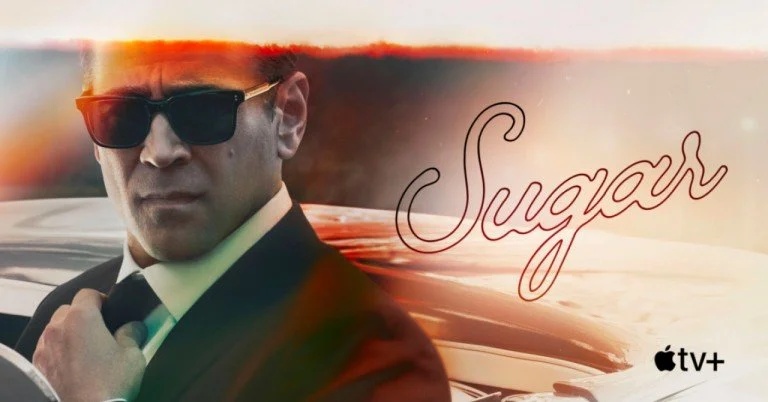
Apple TV+’s Sugar is one of the most fascinating, polarizing, and genuinely bizarre television experiments of recent years. It begins as a gorgeous, hyper-stylized love letter to classic Hollywood film noir, only to pull off a genre-shattering plot twist that leaves the audience either completely thrilled or utterly betrayed.
The Setup: A Modern-Day Marlowe
The series stars Colin Farrell as John Sugar, a suave, impeccably dressed private investigator operating in Los Angeles. He specializes in tracking down missing persons, driven by the lingering grief of his own sister's disappearance years prior. Sugar is hired by legendary Hollywood producer Jonathan Siegel (James Cromwell) to find his troubled, recovering-addict granddaughter, Olivia.
On the surface, the show checks every single neo-noir box:
A lonely, world-weary detective with a strict moral code.
A glamorous, sun-drenched but deeply corrupt Los Angeles backdrop.
A rotting underbelly of wealth, privilege, and Hollywood secrets.
A beautiful, tragic ally in Olivia's former rock-star stepmother, Melanie (Amy Ryan).
The directing—steered by Fernando Meirelles (City of God)—is incredibly cinematic. The show is unique for its meta-cinematic editing, frequently intercutting classic film clips (starring the likes of Humphrey Bogart, Glenn Ford, and Paul Newman) directly into the action. It mirrors what John Sugar is thinking, framing him as a man who views and understands human behavior entirely through the lens of old cinema.
The Farrell Factor
The series works as well as it does entirely because of Colin Farrell. He brings an effortless, velvety charisma to the role, but coats it in a striking, gentle empathy. Unlike the traditionally cynical, hard-boiled detectives of the genre who beat answers out of suspects, John Sugar is remarkably kind, deeply sensitive, and aggressively non-violent unless pushed to an absolute extreme. He is completely magnetic on screen, anchoring a narrative that frequently threatens to spin out of control.
Does It Work?
Your enjoyment of Sugar will hinge entirely on how you feel about this genre whiplash.
Pros: For many noir purists, the twist feels like a jarring gimmick that derails a perfectly compelling, grounded detective story. The final episodes are forced to suddenly rush through massive science-fiction world-building while trying to wrap up the actual human trafficking case he was hired to solve.
Cons: For others, it’s a brilliant, audacious swing. It transforms a standard genre homage into something genuinely fresh. It uses the sci-fi element to offer a poignant, moving look at modern loneliness, asking a fundamental question through an alien lens: In a world this corrupt, how do we retain our humanity?
The Verdict
Sugar is a gorgeously shot, impeccably acted mystery that benefits immensely from a phenomenal lead performance by Colin Farrell. It is slick, atmospheric, and fiercely original—even if its sci-fi ambitions occasionally overcrowd the narrative. If you are looking for a standard, predictable detective procedural, look elsewhere. But if you appreciate bold creative risks and a stunning visual style, it is well worth the ride.
Season 2
Season 2 of Sugar pulls off another surprising move: it slams the reset button on the sci-fi conspiracy and pivots heavily back into detective noir.
Instead of turning the show into a high-concept sci-fi thriller, the writers use the twist as an emotional anchor rather than a plot engine. The sci-fi element is treated as "spice" to explore John Sugar's psyche, while the actual narrative structure returns to a classic, grounded Los Angeles mystery.
The Reset: Moving Past the Sci-Fi Conspiracy
When Season 1 ended, Sugar stayed behind to track down his treacherous friend Henry Thorpe and find answers about his missing sister, Djen. Season 2 disposes of the Henry plotline almost immediately, burning away the evidence of that specific network. By clearing the board of the broader conspiracy, the show intentionally shrinks its scope back down to the streets of LA.
The Detective Noir Returns
Sugar goes right back to doing what he does best: being a suave, film-obsessed private investigator.
The New Case: Sugar takes on a brand-new, street-level mystery involving the disappearance of Ji Moon, the older brother of an up-and-coming local boxer (played by Raymond Lee and Jin Ha).
The Atmosphere: The stunning cinematic style remains intact. The show continues to feature gorgeous, sun-drenched shots of Los Angeles, smooth jazz, velvety voiceovers, and the signature meta-cinematic editing that cuts in classic Hollywood film clips.
How the Twist Still Matters
Just because the plot isn't sci-fi heavy doesn't mean the twist was forgotten.
Sugar is completely isolated now that his people have left. His nature manifests through an existential crisis. The warning of "assimilation" hangs heavy over him; he is no longer an objective observer looking from the outside. He cares too much, feels too deeply, and is entirely invested in the condition he is in.
The Verdict on the Shift
If the massive genre shift at the end of Season 1 annoyed you, you will likely find Season 2 a breath of fresh air. It strikes a much better balance, delivering a genuinely compelling, dark neo-noir mystery while using his background purely to heighten his profound sense of loneliness and empathy. It’s a detective show first, with just a dash of sci-fi to keep it unique.